
Have you ever walked past a store and felt attracted to it just because the sign outside looked clean, bold, and professional?
That is the power of good branding. A well-made sign creates a strong first impression, builds trust, and tells people what a business stands for.
But many businesses face a common problem: even with a great design, the sign doesn’t always last. It can fade in the sun, peel in the rain, bend in the wind, or lose its appearance after just a few months.
That’s why smart businesses pay close attention to the material used for signage.
The right printing material can improve brand visibility, increase durability, and keep a sign looking sharp for years. On the other hand, the wrong material can turn even a great design into a disappointment.
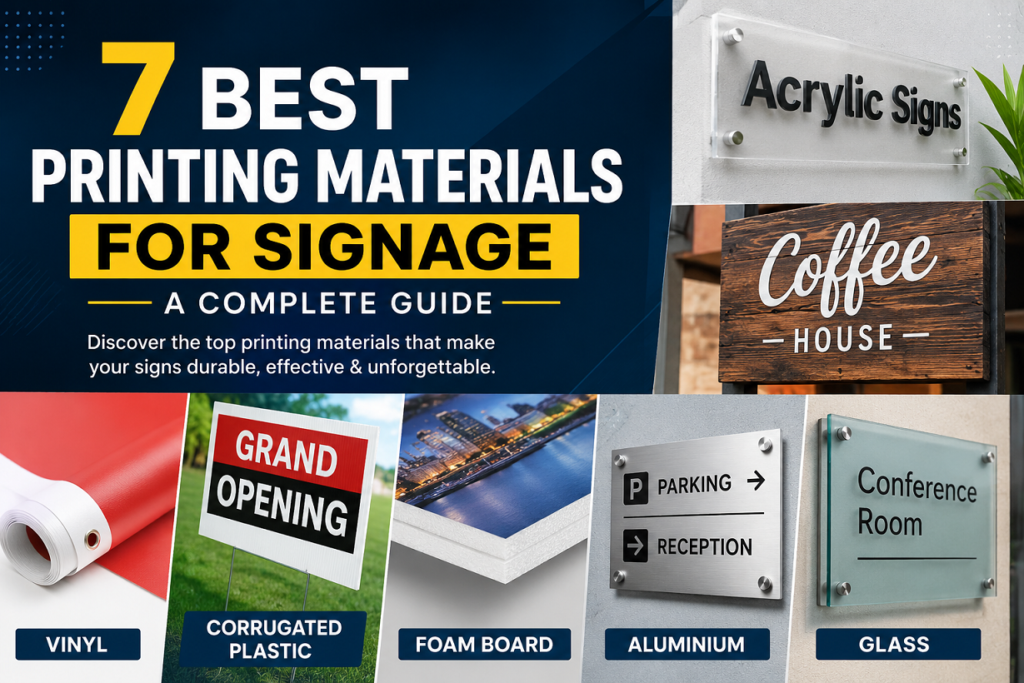
In this article, we’ll explore the 7 best printing materials for signage and explain where each material works best.
1. Vinyl
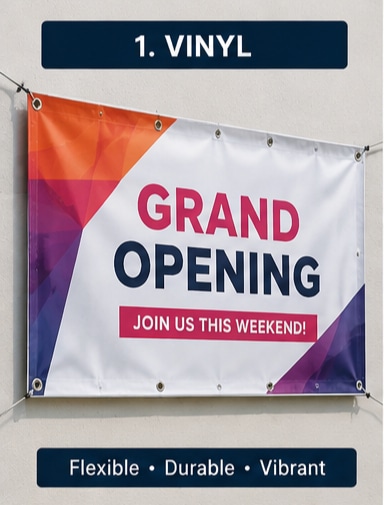
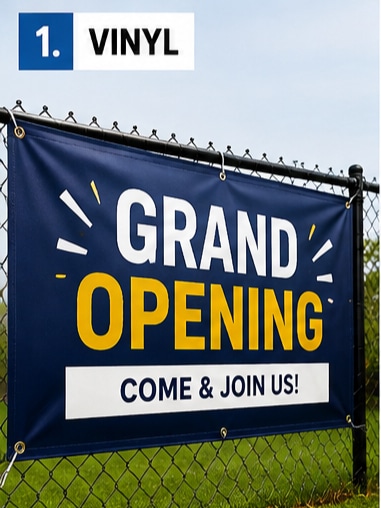
Vinyl is one of the most widely used materials for signage. It is flexible, durable, and suitable for both indoor and outdoor signs.
If you need a banner for an event, stickers to promote your business, or other promotional signage, vinyl can be an excellent choice.
People often choose vinyl because it can handle rain, sunlight, and everyday wear without getting damaged easily. It can also be cut into almost any shape or size, making it useful for many different types of signs.
Vinyl works well with both digital printing and screen printing, giving businesses plenty of design options.
Another advantage is its affordability. Compared with many other signage materials, vinyl is relatively inexpensive, making it a practical option for new businesses, events, and personal projects.
Best for: Banners, stickers, promotional signs, window graphics, and temporary outdoor signage.
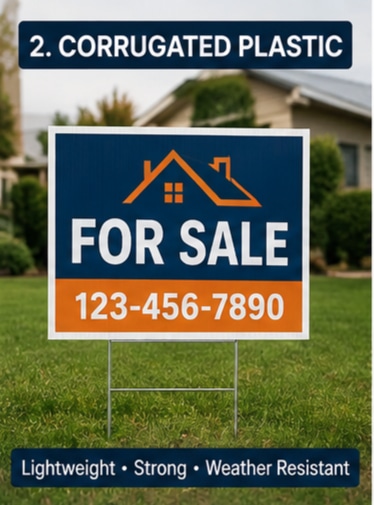
2. Corrugated Plastic
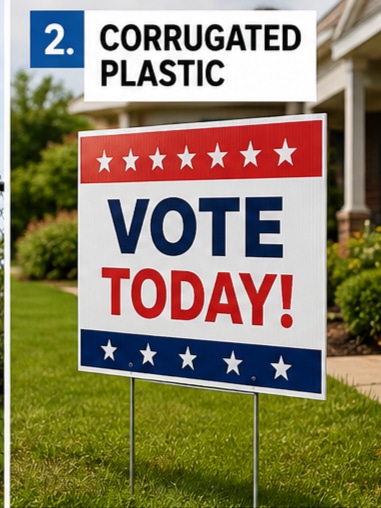
If you are looking for a signage material that is lightweight yet strong, corrugated plastic is a great option.
It is especially popular for:
- Yard signs
- Political signs
- Real estate signs
- Event promotions
- Temporary outdoor signage
Corrugated plastic signs are ideal for temporary outdoor use because they can handle rain and sunlight while remaining affordable.
You can print colorful graphics, logos, and text on the material while keeping your message clear and visible. It is also easy to cut into different shapes and sizes.
Overall, corrugated plastic is a practical choice when you need a temporary outdoor sign that is lightweight, affordable, and easy to move.
Best for: Yard signs, event signs, political signs, real estate signs, and temporary promotions.
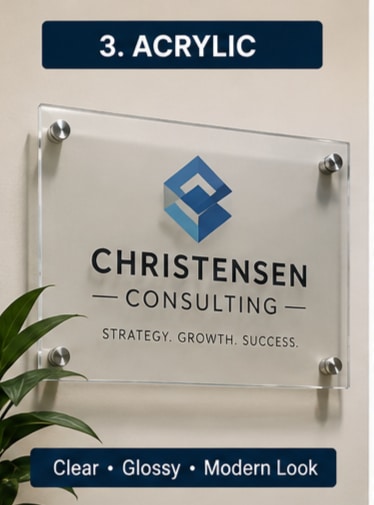
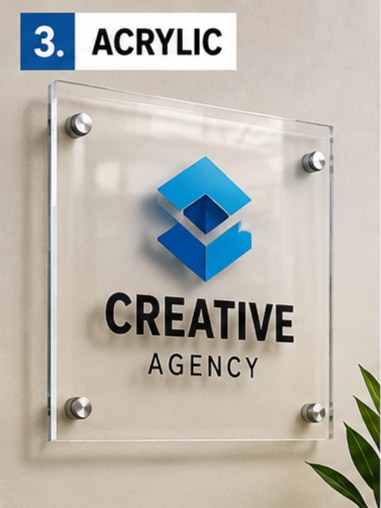
3. Acrylic
Acrylic signs look similar to glass, but they are actually made from a type of plastic. They are clear, shiny, and provide a modern and professional appearance.
You have probably seen acrylic signs in:
- Offices
- Reception areas
- Nameplates
- Hotels
- High-end retail stores
One of the biggest advantages of acrylic is its smooth, glossy finish, which creates a polished appearance.
Acrylic can be used in clear or colored designs and is relatively lightweight while still being durable. It can also be cut into different shapes and sizes.
Another interesting feature is that acrylic works particularly well with backlighting. When illuminated from behind, it can create an attractive and eye-catching effect.
If you want signage that looks modern, premium, and professional, acrylic is definitely worth considering.
Best for: Office signs, reception signs, nameplates, retail signage, and premium indoor displays.
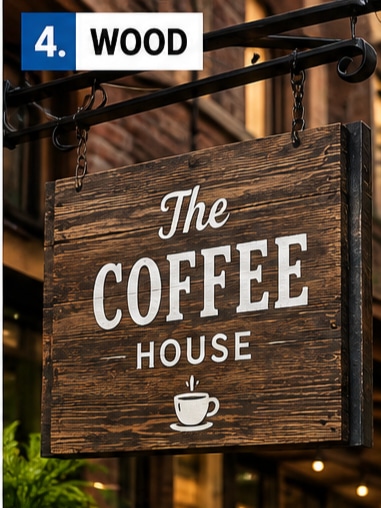
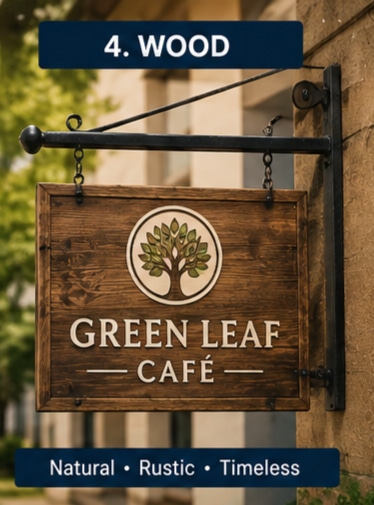
4. Wood
Wooden signs bring a classic and rustic appearance to a business or property.
That is why you often see them in:
- Cafes
- Boutiques
- Farmhouse-style homes
- Restaurants
- Outdoor shops
Wood is highly customizable. You can carve, paint, stain, or print designs on it depending on the look you want.
Many people choose wooden signs because they have a unique, handcrafted appearance. They can also provide a warm and natural feel that works particularly well with certain brands and business styles.
Wood can be strong and long-lasting, but there is one important consideration: untreated wood can be affected by weather.
If you plan to use a wooden sign outdoors, applying a suitable protective coating can help protect it from moisture, sunlight, and other environmental factors.
Best for: Cafes, restaurants, boutiques, rustic businesses, homes, and decorative outdoor signs.
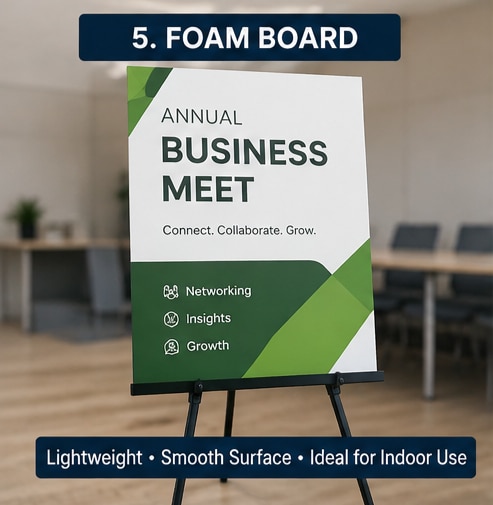
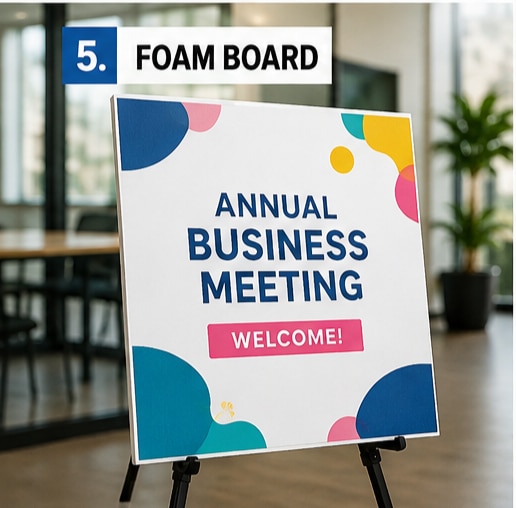
5. Foam Board
Foam board consists of a lightweight foam core covered with paper or plastic. It is primarily used for indoor signage and displays.
Because it is lightweight and easy to carry, foam board is commonly used for:
- Presentations
- School projects
- Indoor events
- Promotional displays
- Trade show graphics
Its smooth, flat surface allows printed graphics and text to appear bright and clear.
Another benefit is its affordability, making foam board a good choice when you need attractive indoor signage without spending too much.
However, foam board has an important limitation: it is not suitable for outdoor use.
Exposure to rain or moisture can cause it to bend, warp, or become damaged.
Best for: Indoor displays, presentations, events, school projects, and temporary promotional signage.
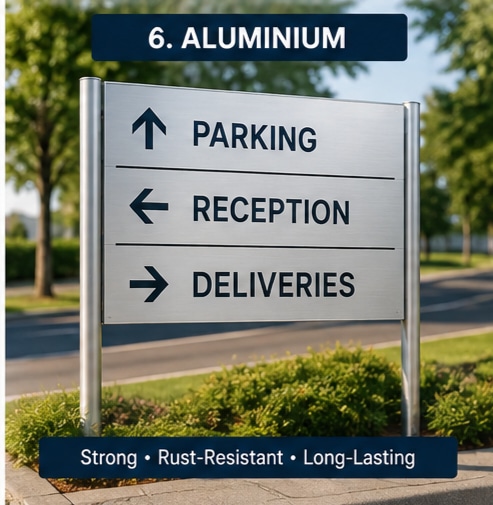
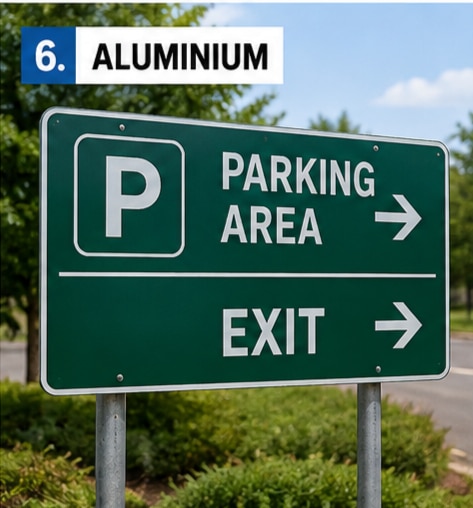
6. Aluminium
Aluminium is one of the most reliable materials for signage because it is strong, durable, and relatively lightweight.
Although aluminium is a metal, it is still easy to handle and install compared with many other metal signage materials.
It is commonly used for outdoor signs such as:
- Parking signs
- Directional signs
- Real estate signs
- Building signs
- Safety signs
Aluminium is particularly useful outdoors because it can withstand various weather conditions and is naturally resistant to rust.
You can paint aluminium or apply printed vinyl to its surface to create clean, sharp designs.
Because aluminium signs can last for many years with proper care, they are a smart choice when you need long-term, reliable signage.
Best for: Outdoor signs, parking signs, directional signs, safety signs, and long-term business signage.
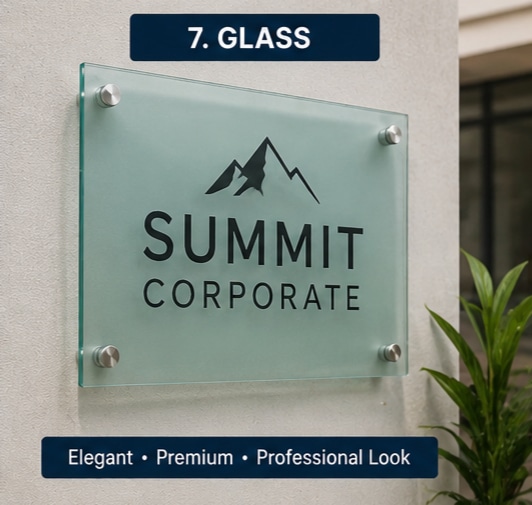
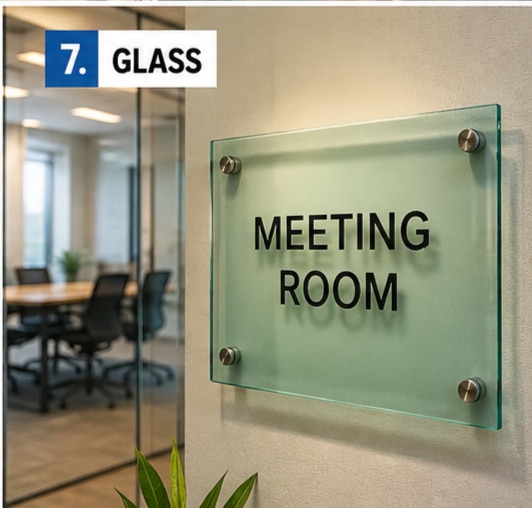
7. Glass
Glass signs are generally chosen when a business wants a classy, premium, and professional appearance.
They provide a clean and sophisticated look, which is why you often see glass signage in:
- Corporate offices
- Hotel lobbies
- Reception areas
- Luxury retail stores
- Professional buildings
Glass can create a high-end appearance that works particularly well for brands that want to communicate quality and professionalism.
However, compared with some plastic or metal alternatives, glass requires more careful handling because it can be heavier and more fragile.
Best for: Premium offices, hotel lobbies, reception areas, luxury businesses, and high-end interior signage.
How to Choose the Right Signage Material
Choosing the right material depends on several factors, including where the sign will be used, how long you need it to last, your budget, and the appearance you want.
For example:
- Vinyl is a versatile and affordable option for banners and promotional graphics.
- Corrugated plastic works well for lightweight temporary outdoor signs.
- Acrylic is ideal when you want a modern and premium appearance.
- Wood provides a natural and rustic look.
- Foam board is best for lightweight indoor displays.
- Aluminium is a strong choice for durable outdoor signage.
- Glass is suitable for premium and professional environments.
By matching the material to your specific needs, you can get better performance and make your signage more effective.
Final Thoughts
Choosing the right printing material is an important part of creating effective signage.
A great design alone is not enough. The material you choose can affect the sign’s durability, appearance, cost, and suitability for indoor or outdoor use.
Whether you need an affordable vinyl banner, a professional acrylic sign, a rustic wooden display, or a durable aluminium sign, understanding the advantages and limitations of each material can help you make a better decision.
A well-chosen signage material supports your design, helps your message stand out, attracts attention, and creates a lasting impression on your audience.